

There was a season when my health began to unravel in ways I didn’t understand. What started as small discomforts slowly grew into something that left me exhausted, discouraged, and searching for answers. Looking back now, I can see that the breaking of my health was also the beginning of God leading me somewhere unexpected—back to the soil, back to Scripture, and back to a deeper trust in His design.
At first it was little things—fatigue that didn’t go away, digestion that felt unpredictable, a body that no longer responded the way it once had. But over time those symptoms began to stack on top of one another until I found myself in a place that felt both exhausting and discouraging.
It eventually broke me.
Not in a dramatic way.
In a quiet way.
The kind of breaking that brings you to the end of your own understanding.
And strangely, that breaking became the beginning of something good.
Returning to the Word
When I reached that place, I found myself drawn back to Scripture in a way that felt different from before. I had read my Bible for years, but now I read it like someone searching for direction.
My prayers became simpler.
“Father, show me what I’m missing.”
“Help me understand what my body needs.”
“Guide me.”
Slowly—very slowly—answers began to come.
Not all at once. Not in a single moment of clarity. Instead, the Lord seemed to guide me through a series of small realizations and adjustments that gradually reshaped how I lived.
One of the first areas He began to draw my attention to was something we all deal with every day: food.
Paying Attention to What I Was Consuming
I began looking more closely at the quality of the food I was eating. What I discovered surprised me more than I expected.
Much of what we call food today is heavily processed, manufactured, and far removed from the way God originally designed nourishment to work. Even fruits, vegetables, and meats can be produced in ways that strip away much of their life-giving value.
The more I learned about non-organic farming practices, chemical treatments, and the conditions in which much livestock is raised, the more I realized how disconnected our modern food system has become from the rhythms of creation.
At some point I had a realization that was both uncomfortable and clarifying:
We truly are what we eat.
And I began to see that much of what I had been consuming was closer to something manufactured than something living.
In a strange way, I felt as if I was becoming what I was eating—tired, processed, and out of alignment with how God designed the body to function.
Growing Food Instead of Just Buying It
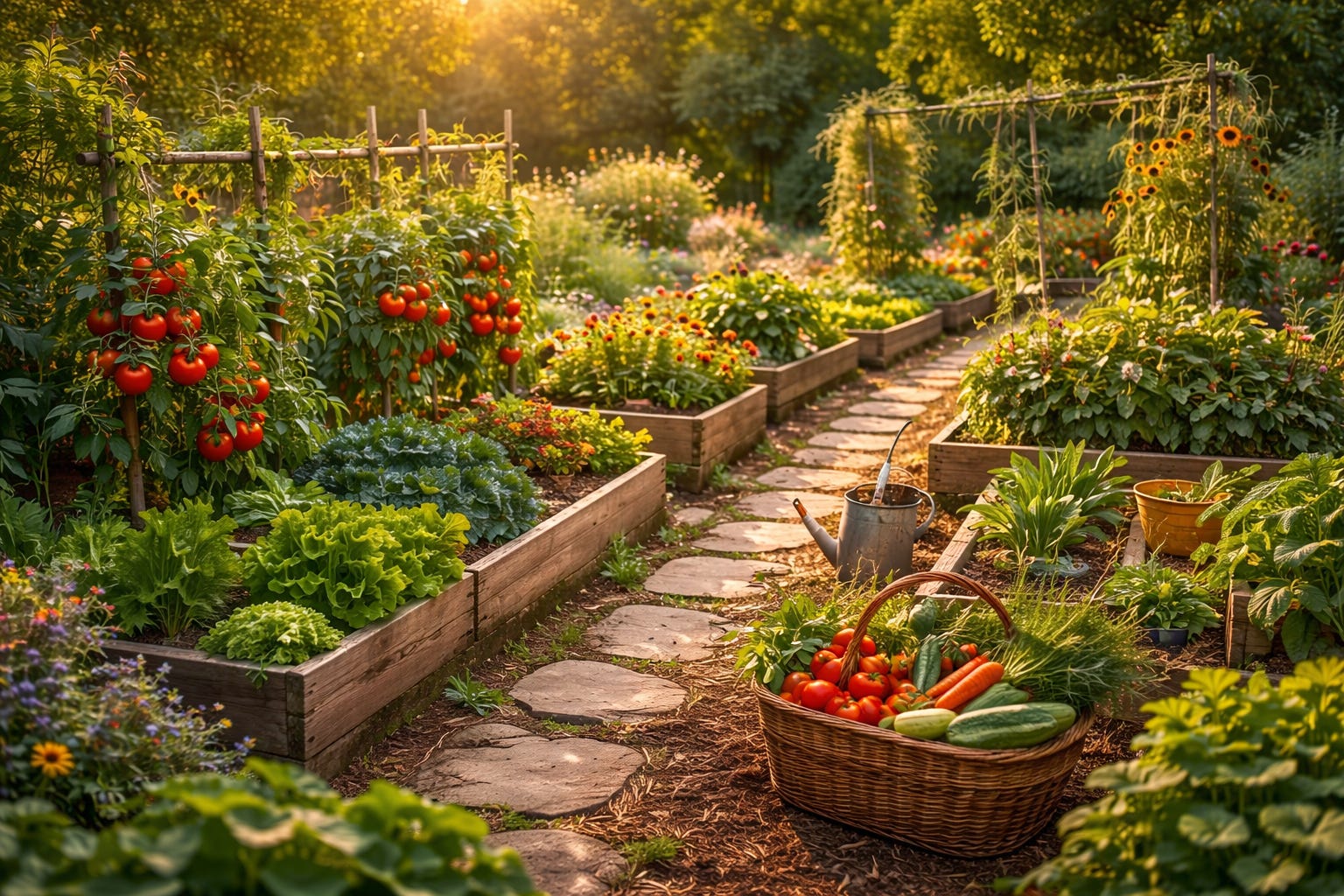
That realization led my husband and me to begin expanding our garden.
We had always grown some vegetables, but now the garden became something more intentional. I started learning about organic gardening methods and choosing to grow food in ways that worked with creation rather than against it.
And something unexpected happened in the process.
Gardening slowed me down.
Tending soil, planting seeds, watching the weather, caring for plants day after day—it created a rhythm that naturally drew my attention back to the Lord.
Gardening requires patience.
It requires observation.
It requires humility.
You quickly learn that growth ultimately belongs to God.
Every healthy plant, every harvest, every season of abundance feels like a quiet gift.
In many ways, the garden became a place of prayer.
Learning to Raise Our Own Food
We had already kept chickens for eggs—mostly for my husband and our dog, since eggs unfortunately never agreed well with my digestion.
But as we learned more about where food comes from, we also began raising our own meat chickens.
That experience changed the way I think about food in a profound way.
Raising animals for nourishment carries a weight of responsibility. It reminds you that food is not just something wrapped in plastic on a grocery shelf. It comes from living systems that God designed with care and order.
Providing animals with clean space, good feed, and proper care became another way of participating in stewardship.
And it deepened my gratitude.
Meals no longer felt ordinary. They felt intentional.
A Different Relationship With the Table
The changes we made were not about achieving perfection. My health journey has not been a straight line, and I continue to learn along the way.
But one thing became clear: when we begin to pay attention to how God designed nourishment, our relationship with food changes.
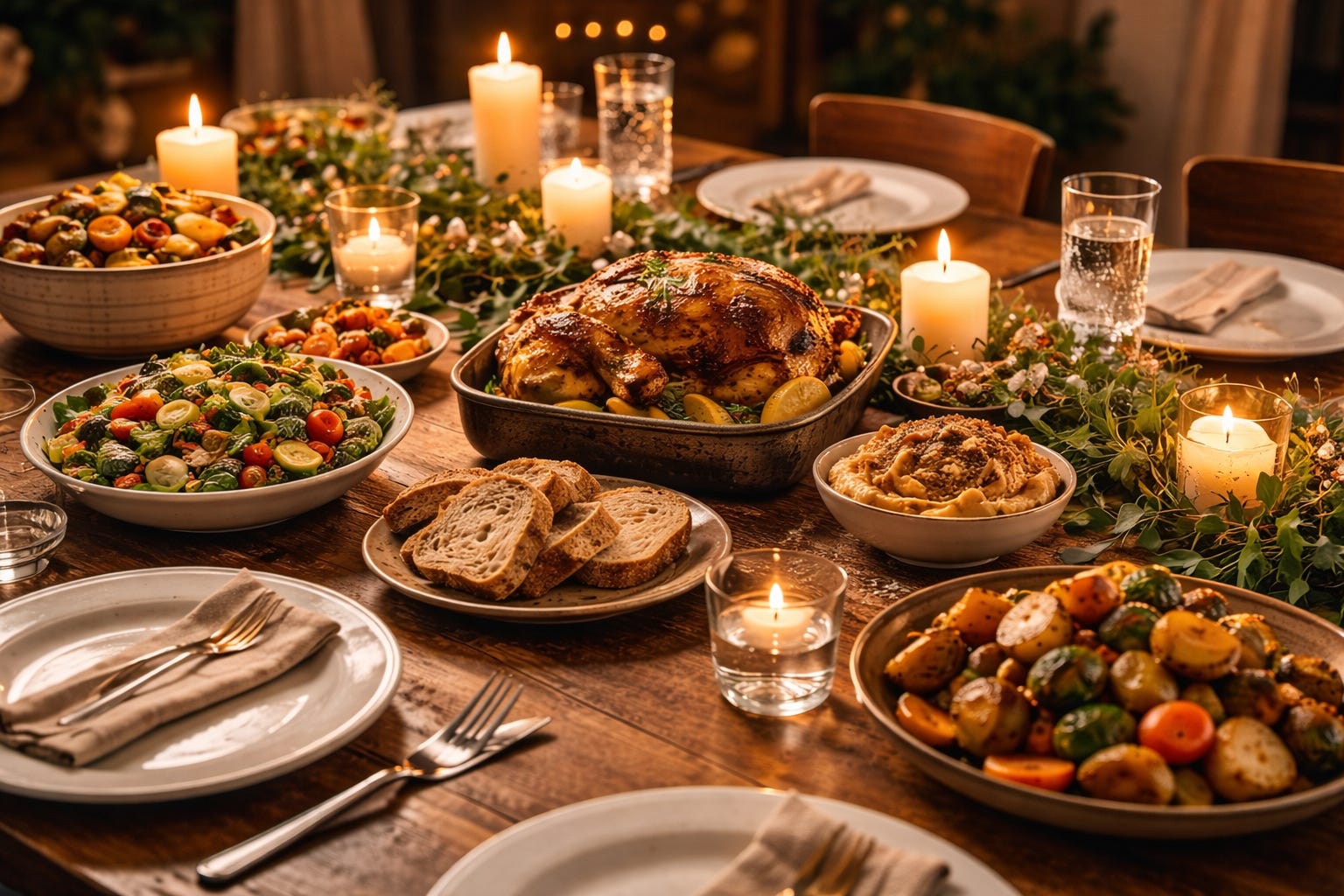
Eating becomes less about convenience and more about provision.
Cooking becomes less about rushing and more about care.
The table becomes a place where gratitude naturally grows.
God feeds His people with intention.
The Spiritual Side of Stewardship
This is why Scripture speaks about food more often than we sometimes realize.
From the garden of Eden to the manna in the wilderness, from the bread Jesus multiplied to the meals He shared with His disciples after the resurrection, nourishment is woven throughout the story of God’s care for His people.
Food reminds us that life itself is received.
When we slow down enough to notice that, the table becomes more than a place to eat. It becomes a place of worship.
A Gentle Invitation
If you have never thought about the connection between faith and food before, you don’t need to overhaul your entire life tomorrow.
Start with awareness.
Pay attention to how your body feels. Notice which foods bring energy and which leave you depleted. Consider where your food comes from and how it was grown.
Small steps toward alignment often lead to deeper wisdom over time.
And as I’ve learned through this journey, God is faithful to guide us—even in the ordinary decisions we make about what we place on our table.
This experience eventually shaped the next piece in the Grace That Transforms series, where we explore how Scripture speaks about food, holiness, and daily nourishment. That post will be shared this Sunday. 🍞📖
A Gentle Next Step
This journey of learning to care for my health eventually became something I wanted to share with others.
As I spent more time in Scripture and paid closer attention to the rhythms God designed for our bodies, I began collecting the passages, prayers, and reflections that helped guide me through that season. Over time, those notes became the foundation for a small devotional journal called 40 Days of Health & Healing.
It isn’t a program or a list of rules. It’s simply a space to slow down with Scripture and invite God into the places where our bodies, habits, and faith intersect.
If this conversation about food, stewardship, and healing resonates with you, that journal might be a helpful companion as you reflect and pray through your own season of health.
You can learn more about it here:
👉Book: 40 Days of Health & Healing: A Scripture Journal
👉EBook: 40 Days of Health & Healing: A Scripture Journal
Closing Reflection
Over time, I began to see that the garden was doing more than producing food—it was teaching me how God restores life. Seeds placed quietly in the soil, tended with patience and prayer, slowly becoming nourishment.
My own healing followed a similar rhythm. As I returned to Scripture each day, the Word began planting truth where fear and frustration had taken root.
Just as a garden cannot be rushed, neither can the work God does in us. But when we remain close to Him—listening, tending, trusting—life begins to grow again.
The same God who brings fruit from the soil is faithful to bring restoration to the hearts and bodies of His people. 🌿📖🤍
— Constance
If this post stirred something in you, consider sharing it with a friend who may be asking similar questions.
And if you find yourself wanting to walk this more slowly—more prayerfully—there is space for that.
🚪Inside The Faithful Path membership, we move beyond surface reading into steady formation. We explore Scripture carefully, reflect honestly, and practice living what we believe—without urgency, pressure, or performance.
Paid subscribers receive:
Extended reflection guides
Scripture-centered devotionals
Spiritual formation practices
A quiet community of women seeking rooted faith
If you’re ready to go deeper—not faster, just deeper—you’re warmly invited.
👉🏻 Join The Faithful Path Membership
If a paid subscription isn’t feasible right now but this space has encouraged you, you can leave a one-time tip here. Every gift helps sustain the quiet work being built in this community. 🤍
Scripture quotations are from The Holy Bible, English Standard Version® (ESV®), copyright © 2001 by Crossway, a publishing ministry of Good News Publishers. Used by permission. All rights reserved.