

A high school teacher reflects on stress, overstimulation, exhaustion, and the spiritual importance of slowing down enough to truly rest and hear God clearly.
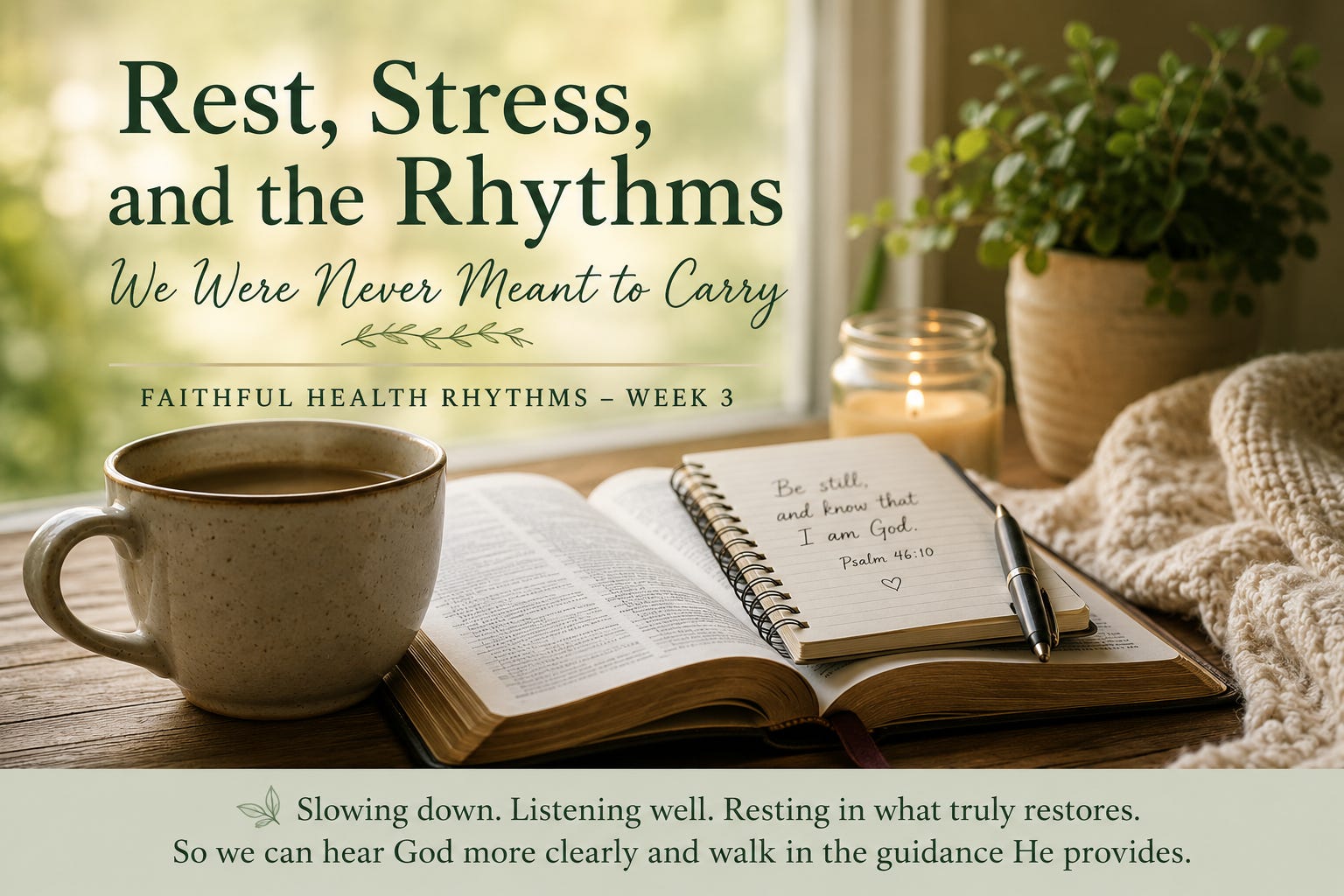
For most of my adult life, I thought being tired was normal.
Not just occasionally tired, but deeply and consistently depleted. The kind of exhaustion that follows you through the day no matter how much coffee you drink or how determined you are to push through it. I think many us quietly live in that place for years without fully realizing how much stress their bodies are carrying.
I know I did.
Teaching high school requires a constant outpouring of energy and attention. By the end of the day, my mind often feels as if it has processed hundreds of questions, conversations, decisions, interruptions, and small moments of emotional energy without ever fully becoming quiet.
Even on good days, there is very little silence. Bells ring, students need help, decisions are made quickly, and the pace rarely slows down. I think many teachers quietly adapt this way. We become so accustomed to mental noise, decision fatigue, and constant stimulation that exhaustion starts to feel normal rather than concerning.
There were seasons when I would come home mentally exhausted but still unable to truly rest. My body was tired, but my mind still felt overstimulated from an entire day of constant input.
What I didn’t understand then was how much chronic stress affects the body—not only mentally and emotionally, but physically as well.
🌿 When “Pushing Through” Stops Working
For years, I approached exhaustion the same way many people do: I ignored it until I couldn’t anymore.
If I felt run down, I tried to work harder. If I was overwhelmed, I told myself I simply needed to manage my time better. Rest often felt unproductive to me, and slowing down felt almost irresponsible when there was always more to do.
But eventually, the body begins responding to the way we live.
I started noticing how constantly “running on empty” affected everything else—my energy, sleep, inflammation, digestion, focus, and overall sense of well-being. I began learning more about cortisol, stress, nervous system overload, and how deeply connected our physical and emotional health really are.
The more I paid attention, the more I realized my body wasn’t failing me.
It was trying to communicate with me.
🌿 Rediscovering Rest as Stewardship
One of the biggest mindset shifts for me has been learning to see rest differently.
Not as laziness.
Not as weakness.
Not as something to earn only after exhaustion.
But as stewardship.
Come to me, all who labor and are heavy laden, and I will give you rest. — Matthew 11:28
Scripture repeatedly points us toward rhythms of rest. God Himself established rhythms of work and restoration from the very beginning. Yet modern life often encourages the exact opposite—constant stimulation, constant productivity, and constant urgency.
For a long time, I lived inside those rhythms without questioning them.
Now, I’m learning to pay closer attention to what restores my body instead of only focusing on what helps me get through the day.
🌿 Small Changes That Began to Matter
This shift didn’t happen overnight, and it certainly wasn’t one single thing that changed everything. Instead, it came through small, steady adjustments over time.
I began prioritizing sleep more intentionally instead of treating it as optional. I started using a sleep apnea machine consistently, which made a far bigger difference than I expected. I became more aware of how stress and overstimulation affected my body physically and started building quieter rhythms into my mornings through scripture journaling, tea, prayer, and slower preparation before the demands of the day began.
I also began noticing how much constant stimulation affects us. Noise, rushing, screens, multitasking, and never fully slowing down all keep the body in a heightened state of tension far longer than we realize.
Interestingly, just today one of my students asked if she could practice her chemistry presentation in front of me before class. Her topic was caffeine and its effects on the body, particularly how long it can remain in your system and interfere with quality sleep long after you think it has “worn off.” I found myself smiling a little as she presented because it connected so directly to the very things I’ve been learning myself lately.
Honestly, many teachers live in that cycle for years. Early mornings, constant output, after-school responsibilities, and mentally carrying so much throughout the day can leave us relying on stimulation just to keep going.
I think many of us are so accustomed to functioning in a constant state of stimulation that we no longer recognize how deeply it impacts our rest. We feel tired, so we reach for more caffeine. Then we sleep poorly, wake up exhausted, and repeat the cycle again the next day.
Little by little, I started creating more space for quiet. Not perfectly, but intentionally.
And over time, I noticed something surprising: the calmer my nervous system became, the more other areas of my health seemed to improve alongside it.
🌿 The Connection Between Peace and Physical Health
I think we often separate spiritual peace and physical health as though they are unrelated. But the more I walk through this journey, the more connected they seem to be.
When I begin my mornings grounded in Scripture instead of immediately rushing into stress, my entire day feels different. When I slow down long enough to nourish my body instead of constantly reacting to exhaustion, I function differently. When I prioritize rest instead of glorifying depletion, my body responds differently.
I’ve also realized that constant exhaustion and overstimulation don’t just affect the body physically—they affect us spiritually as well.
When life becomes nothing but rushing, reacting, and pushing through, it becomes much harder to slow down enough to listen well.
Some of the clearest moments of guidance and peace in my life have not come while striving harder, but while finally becoming still enough to hear. Scripture journaling in the mornings, quieter rhythms, intentional rest, and stepping away from constant noise have all helped create more space for that.
And honestly, hearing from God more clearly changes the way you move through life. Instead of trying to force everything through your own understanding and effort, you begin responding with more peace, wisdom, and direction. There is something deeply freeing about no longer feeling like you have to carry everything entirely on your own.
None of this means life suddenly becomes stress-free. Teaching still requires energy. Responsibilities still exist. Difficult seasons still come.
But I no longer believe the answer is simply learning to tolerate chronic exhaustion better.
I think many of us need permission to acknowledge that the rhythms we are living in may not be sustainable. Especially in professions centered around constantly pouring into others, we often become skilled at ignoring our own depletion until the body finally forces us to pay attention.
🌿 A Different Kind of Strength
For a long time, I thought strength looked like endurance at all costs.
Now I think it may look more like wisdom.
Wisdom that recognizes limits.
Wisdom that pays attention to what the body is communicating.
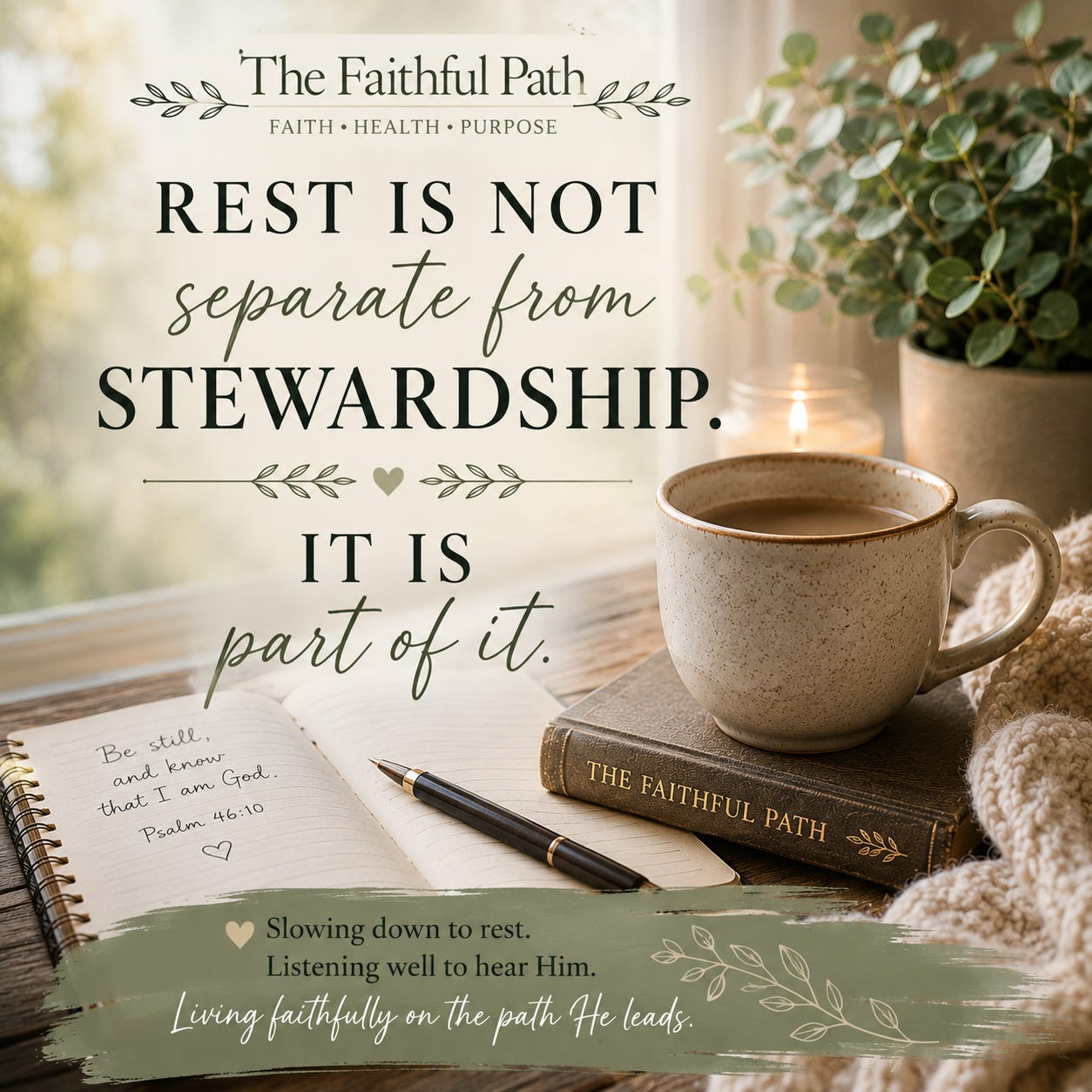
Wisdom that understands rest is not separate from stewardship, but part of it.
I am still learning this. Honestly, probably more slowly than I would like.
But I no longer see caring for my stress levels, sleep, and nervous system as optional extras. I see them as part of faithfully caring for the body God has entrusted to me.
🌿 This Week’s Gentle Practice
This week, instead of asking yourself how to become more productive, ask a different question:
What genuinely restores me?
Not what distracts.
Not what numbs.
Not what temporarily helps you escape stress.
What restores you?
Then try creating even ten intentional minutes for that this week.
🌿 Reflection
Have you been resting… or simply collapsing from exhaustion?
There is a difference.
🌿 Closing
I’m beginning to believe that many of us have spent so long adapting to stress that we no longer recognize how heavily it weighs on the body.
But restoration often begins with awareness.
With slowing down enough to notice.
With listening sooner.
With allowing rest to become part of stewardship rather than something we feel guilty for needing.
And perhaps that, too, is part of walking faithfully.
🌿Did this stir something in you? Consider sharing it with a friend who may be asking similar questions.
🌿 So much of modern life teaches us to ignore our exhaustion and simply keep pushing through.
Faithful Health Rhythms was created as a quieter space to rethink that—to explore rest, stewardship, nourishment, and the small daily rhythms that help us care well for the bodies and lives God has entrusted to us.
Paid subscribers receive access to the full series and future reflections as we continue walking this path together. You’re always welcome here 🤍
🌿 Related Reflections
Learning to Slow Down Enough to Rest, Restore, and Hear God More Clearly
Modern Convenience, Real Nourishment, and the Rhythms We Were Never Meant to Lose
Scripture quotations are from The Holy Bible, English Standard Version® (ESV®), copyright © 2001 by Crossway, a publishing ministry of Good News Publishers. Used by permission. All rights reserved.
I’m beginning to believe that many of us have spent so long adapting to stress that we no longer recognize how heavily it weighs on the body.....so true